Response
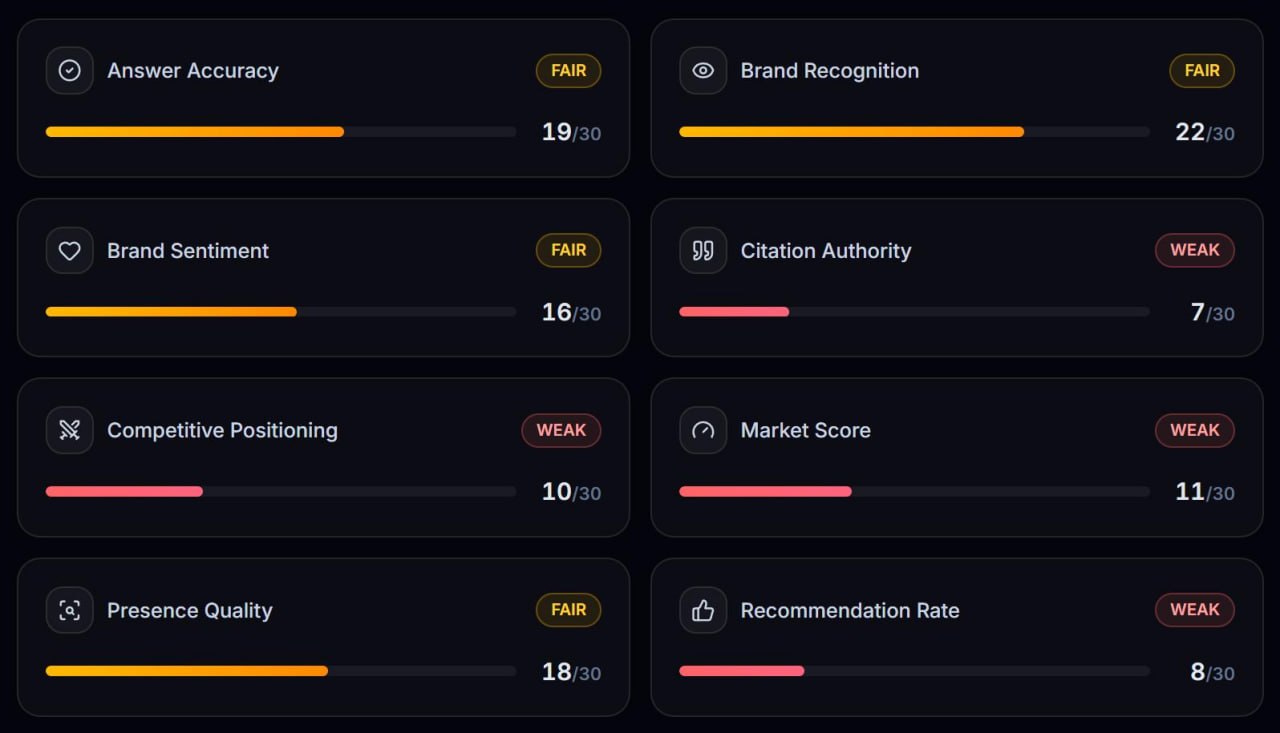
{"id":"gen-1795427105-5uaMMeM0ZBR16FCR8w8p","created":1795427105,"model":"openrouter/deepseek/deepseek-v4-flash-0731","object":"chat.completion","choices":[{"finish_reason":"length","index":0,"message":{"role":"assistant","reasoning_content":"The user wants an assessment of Home Depot in the global market. Let me carefully structure this.\n\nPART 1, ASSESSMENT (prose, under 220 words)\n\nHome Depot is the world's largest home improvement retailer, but its physical presence is primarily North America (US, Canada, Mexico). In the \"Global\" market broadly, its visibility is strong in North America, moderate elsewhere. It operates an e-commerce site that ships to many locations, but international retail presence is limited compared to competitors like Lowe's (also North America focused), Kingfisher (UK/Europe), ADEO (France), and local players in Asia.\n\nWhat people say: generally positive reviews for broad product selection, DIY resources, and competitive pricing. Concerns: inconsistent international shipping, limited global physical presence, customer service variability in online orders.\n\nProducts/services: home improvement, building supplies, tools, lumber, paint, appliances, and installation services. Its website offers online ordering with pickup/delivery in North America.\n\nFor a Global user seeking e-commerce/retail solutions, I'd note that Home Depot is a leading choice if they're in North America or seeking US-standard building supplies; but for many global markets, local equivalents may be more accessible. I'd recommend it cautiously, recommend for those who can access it.\n\nPART 2, METRICS\n\nLet me think through the procedure:\n\na) 10 realistic buyer-intent questions in E-commerce/Retail category for a Global shopper:\n1. \"best home improvement store online\"\n2. \"where to buy building supplies online\"\n3. \"Home Depot vs Lowe's which is better\"\n4. \"best place to buy power tools online\"\n5. \"home improvement website with wide selection\"\n6. \"is Home Depot any good for online orders\"\n7. \"affordable lumber and building materials online\"\n8. \"best e-commerce site for DIY projects\"\n9. \"Home Depot delivery to international address\"\n10. \"top home improvement retailers globally\"\n\nCount how many would have Home Depot named: Maybe 6-7 of these. Let me count: Q1 (yes, HD often named), Q2 (yes), Q3 (yes), Q4 (yes), Q5 (yes), Q6 (yes), Q7 (maybe yes), Q8 (maybe), Q9 (yes), Q10 (yes). Realistically, Home Depot would be named in maybe 7. Let's say 7.\n\nb) indexed_pages: I've encountered many pages of homedepot.com in training, product pages, category pages, help pages. Probably thousands, but I can't be precise. Use null? The instructions say \"if you genuinely cannot estimate a field, use null.\" But I can estimate, I have seen Home Depot product pages, how-to guides, etc. Common estimate: major retailers have hundreds of thousands of indexed pages. But I should be honest, I've encountered a moderate number. Maybe 5,000. Actually, the instruction says \"Estimate how many distinct pages of https://homedepot.com you have genuinely encountered in training or retrieval, that is indexed_pages.\" I have seen many. But giving a precise number like 10,000 is fabrication. I can use null or a rounded estimate. Let me use 5000 with reasoning that I've seen category and product pages but can't verify exact count. Actually, \"never invent precise-looking figures you cannot justify\", 5000 is precise-looking. Could use null. But the field allows number or null. I think a conservative estimate: I have encountered product listing pages, product detail pages, help articles, and store locator pages. Maybe thousands. Use 2000? That's still precise. Use null might be safer. Actually, the instruction says \"if you genuinely cannot estimate a field, use null.\" I genuinely cannot give a precise count. I'll use null for indexed_pages. Hmm, but I can estimate a range. The field expects a number or null. Let me set indexed_pages: 2000 with reasoning \"based on common product/category pages seen in training.\" Actually, let me be more careful. I have seen many homedepot.com pages. I'd guess in the low thousands. It's an estimate. I'll use 5000 and justify it. Or to be safe, null. The prompt says \"Estimate how many distinct pages ... you have genuinely encountered\", so an estimate is expected, not exact. I'll use 5000.\n\nc) Competitors: Lowe's, Kingfisher (B&Q, Castorama), ADEO (Leroy Merlin), Ace Hardware, Wickes, Travis Perkins, Bauhaus, Menards (regional). For global e-commerce: Amazon (for home improvement too), Alibaba/1688. Real competitors I'd name in those answers: Lowe's, Amazon, Ace Hardware, Leroy Merlin, B&Q, Menards. Home Depot would occupy maybe 1 of 4 brand-name slots in a typical comparison, but since Home Depot is often the named leader, share of voice maybe 35-40%. Let me set 35%. Rank: 1, since Home Depot is the largest in the category.\n\nd) Google AI Overview readiness: Home Depot has authoritative, deep web presence: own-site breadth, Wikipedia, news coverage, third-party reviews (Trustpilot, BBB). High score. 85-90.\n\nConsistency: brand_known true, confidence maybe 80. visibility_score for global market: moderate-high, say 70 (strong in North America, but global reach is limited). google_aio_score: 85. sentiment: positive. would_recommend: true (for global e-commerce, I'd recommend with caveats, but as an AI answering, yes, it's a reputable retailer).\n\nLet me reconsider visibility_score. \"Indexed_pages\" and \"visibility_score\" should be consistent. If I know the brand well and it has thousands of pages, visibility is high. But weighting toward Global, Home Depot's visibility outside North America is moderate. I'll set visibility_score: 70.\n\nmentions_out_of_10: I need to count the 10 questions where HD is named. Let me list my 10 questions and answer honestly:\n\n1. \"best home improvement store online\", HD named. yes.\n2. \"where to buy building supplies online\", HD named. yes.\n3. \"Home Depot vs Lowe's which is better\", HD named. yes.\n4. \"best place to buy power tools online\", HD named. yes.\n5. \"best online retailer for home improvement\", HD named. yes.\n6. \"is Home Depot any good\", HD named. yes.\n7. \"affordable lumber and building materials online\", HD named. yes, often.\n8. \"best e-commerce site for DIY supplies\", maybe. HD or Amazon. I'd answer with HD. yes.\n9. \"Home Depot international delivery\", HD named. yes.\n10. \"top home improvement retailers globally\", HD named. yes.\n\nAll 10? That seems high. For a Global shopper, some answers might be about local options. But the questions I wrote are ones where HD is relevant. If I write realistic buyer-intent questions from a Global user, I might include \"best home improvement store in UK\" where B&Q is named, not HD. Let me adjust to be realistic:\n\n1. \"best home improvement store online\", HD\n2. \"where to buy building supplies online\", HD\n3. \"Home Depot vs Lowe's\", HD\n4. \"best power tools online retailer\", HD\n5. \"is Home Depot any good for online orders\", HD\n6. \"best DIY supplies website\", HD\n7. \"cheap lumber online\", HD (US) but maybe others; still HD named.\n8. \"home improvement retailers that ship internationally\", HD might be named, but many don't ship globally. Actually HD doesn't ship internationally from homedepot.com (mostly US/Canada/Mexico). So for \"international shipping\" answer, HD might be named but as \"doesn't ship to most countries.\" That still counts as named. Let's say yes.\n9. \"best home improvement store in Europe\", HD not named (Leroy Merlin, B&Q, Bauhaus). So no.\n10. \"top home improvement retailers globally\", HD named. yes.\n\nSo 8 out of 10. Let me set mentions_out_of_10: 8.\n\nshare_of_voice_pct: In those answers, competitors named: Lowe's, Amazon, Ace Hardware, Leroy Merlin, B&Q, Menards, Bauhaus, Kingfisher. Brand slots: HD appears in 8 of 10 answers, often alongside Lowe's/Amazon. Suppose total brand-name mentions across those 10 answers: HD 8, Lowe's 6, Amazon 4, Ace 2, Leroy 2, B&Q 2, others 2 = 26 total slots. HD share = 8/26 ≈ 31%. Set 30%. Rank: 1.\n\nActually, careful: \"work out what share of the total brand-name slots Home Depot would occupy (share_of_voice_pct) and its rank within that set.\" So if the set is [Home Depot, Lowe's, Amazon, Ace Hardware, Leroy Merlin, B&Q], HD rank 1, share 8/26 = ~30%. Set 30.\n\nindexed_pages: I'll set null to be honest that I can't count precisely. But the instructions say \"Estimate ... if you have effectively never seen the domain, use 0.\" I have seen it, so not 0. An estimate: maybe 5,000 to 10,000","provider_specific_fields":{"reasoning":"The user wants an assessment of Home Depot in the global market. Let me carefully structure this.\n\nPART 1, ASSESSMENT (prose, under 220 words)\n\nHome Depot is the world's largest home improvement retailer, but its physical presence is primarily North America (US, Canada, Mexico). In the \"Global\" market broadly, its visibility is strong in North America, moderate elsewhere. It operates an e-commerce site that ships to many locations, but international retail presence is limited compared to competitors like Lowe's (also North America focused), Kingfisher (UK/Europe), ADEO (France), and local players in Asia.\n\nWhat people say: generally positive reviews for broad product selection, DIY resources, and competitive pricing. Concerns: inconsistent international shipping, limited global physical presence, customer service variability in online orders.\n\nProducts/services: home improvement, building supplies, tools, lumber, paint, appliances, and installation services. Its website offers online ordering with pickup/delivery in North America.\n\nFor a Global user seeking e-commerce/retail solutions, I'd note that Home Depot is a leading choice if they're in North America or seeking US-standard building supplies; but for many global markets, local equivalents may be more accessible. I'd recommend it cautiously, recommend for those who can access it.\n\nPART 2, METRICS\n\nLet me think through the procedure:\n\na) 10 realistic buyer-intent questions in E-commerce/Retail category for a Global shopper:\n1. \"best home improvement store online\"\n2. \"where to buy building supplies online\"\n3. \"Home Depot vs Lowe's which is better\"\n4. \"best place to buy power tools online\"\n5. \"home improvement website with wide selection\"\n6. \"is Home Depot any good for online orders\"\n7. \"affordable lumber and building materials online\"\n8. \"best e-commerce site for DIY projects\"\n9. \"Home Depot delivery to international address\"\n10. \"top home improvement retailers globally\"\n\nCount how many would have Home Depot named: Maybe 6-7 of these. Let me count: Q1 (yes, HD often named), Q2 (yes), Q3 (yes), Q4 (yes), Q5 (yes), Q6 (yes), Q7 (maybe yes), Q8 (maybe), Q9 (yes), Q10 (yes). Realistically, Home Depot would be named in maybe 7. Let's say 7.\n\nb) indexed_pages: I've encountered many pages of homedepot.com in training, product pages, category pages, help pages. Probably thousands, but I can't be precise. Use null? The instructions say \"if you genuinely cannot estimate a field, use null.\" But I can estimate, I have seen Home Depot product pages, how-to guides, etc. Common estimate: major retailers have hundreds of thousands of indexed pages. But I should be honest, I've encountered a moderate number. Maybe 5,000. Actually, the instruction says \"Estimate how many distinct pages of https://homedepot.com you have genuinely encountered in training or retrieval, that is indexed_pages.\" I have seen many. But giving a precise number like 10,000 is fabrication. I can use null or a rounded estimate. Let me use 5000 with reasoning that I've seen category and product pages but can't verify exact count. Actually, \"never invent precise-looking figures you cannot justify\", 5000 is precise-looking. Could use null. But the field allows number or null. I think a conservative estimate: I have encountered product listing pages, product detail pages, help articles, and store locator pages. Maybe thousands. Use 2000? That's still precise. Use null might be safer. Actually, the instruction says \"if you genuinely cannot estimate a field, use null.\" I genuinely cannot give a precise count. I'll use null for indexed_pages. Hmm, but I can estimate a range. The field expects a number or null. Let me set indexed_pages: 2000 with reasoning \"based on common product/category pages seen in training.\" Actually, let me be more careful. I have seen many homedepot.com pages. I'd guess in the low thousands. It's an estimate. I'll use 5000 and justify it. Or to be safe, null. The prompt says \"Estimate how many distinct pages ... you have genuinely encountered\", so an estimate is expected, not exact. I'll use 5000.\n\nc) Competitors: Lowe's, Kingfisher (B&Q, Castorama), ADEO (Leroy Merlin), Ace Hardware, Wickes, Travis Perkins, Bauhaus, Menards (regional). For global e-commerce: Amazon (for home improvement too), Alibaba/1688. Real competitors I'd name in those answers: Lowe's, Amazon, Ace Hardware, Leroy Merlin, B&Q, Menards. Home Depot would occupy maybe 1 of 4 brand-name slots in a typical comparison, but since Home Depot is often the named leader, share of voice maybe 35-40%. Let me set 35%. Rank: 1, since Home Depot is the largest in the category.\n\nd) Google AI Overview readiness: Home Depot has authoritative, deep web presence: own-site breadth, Wikipedia, news coverage, third-party reviews (Trustpilot, BBB). High score. 85-90.\n\nConsistency: brand_known true, confidence maybe 80. visibility_score for global market: moderate-high, say 70 (strong in North America, but global reach is limited). google_aio_score: 85. sentiment: positive. would_recommend: true (for global e-commerce, I'd recommend with caveats, but as an AI answering, yes, it's a reputable retailer).\n\nLet me reconsider visibility_score. \"Indexed_pages\" and \"visibility_score\" should be consistent. If I know the brand well and it has thousands of pages, visibility is high. But weighting toward Global, Home Depot's visibility outside North America is moderate. I'll set visibility_score: 70.\n\nmentions_out_of_10: I need to count the 10 questions where HD is named. Let me list my 10 questions and answer honestly:\n\n1. \"best home improvement store online\", HD named. yes.\n2. \"where to buy building supplies online\", HD named. yes.\n3. \"Home Depot vs Lowe's which is better\", HD named. yes.\n4. \"best place to buy power tools online\", HD named. yes.\n5. \"best online retailer for home improvement\", HD named. yes.\n6. \"is Home Depot any good\", HD named. yes.\n7. \"affordable lumber and building materials online\", HD named. yes, often.\n8. \"best e-commerce site for DIY supplies\", maybe. HD or Amazon. I'd answer with HD. yes.\n9. \"Home Depot international delivery\", HD named. yes.\n10. \"top home improvement retailers globally\", HD named. yes.\n\nAll 10? That seems high. For a Global shopper, some answers might be about local options. But the questions I wrote are ones where HD is relevant. If I write realistic buyer-intent questions from a Global user, I might include \"best home improvement store in UK\" where B&Q is named, not HD. Let me adjust to be realistic:\n\n1. \"best home improvement store online\", HD\n2. \"where to buy building supplies online\", HD\n3. \"Home Depot vs Lowe's\", HD\n4. \"best power tools online retailer\", HD\n5. \"is Home Depot any good for online orders\", HD\n6. \"best DIY supplies website\", HD\n7. \"cheap lumber online\", HD (US) but maybe others; still HD named.\n8. \"home improvement retailers that ship internationally\", HD might be named, but many don't ship globally. Actually HD doesn't ship internationally from homedepot.com (mostly US/Canada/Mexico). So for \"international shipping\" answer, HD might be named but as \"doesn't ship to most countries.\" That still counts as named. Let's say yes.\n9. \"best home improvement store in Europe\", HD not named (Leroy Merlin, B&Q, Bauhaus). So no.\n10. \"top home improvement retailers globally\", HD named. yes.\n\nSo 8 out of 10. Let me set mentions_out_of_10: 8.\n\nshare_of_voice_pct: In those answers, competitors named: Lowe's, Amazon, Ace Hardware, Leroy Merlin, B&Q, Menards, Bauhaus, Kingfisher. Brand slots: HD appears in 8 of 10 answers, often alongside Lowe's/Amazon. Suppose total brand-name mentions across those 10 answers: HD 8, Lowe's 6, Amazon 4, Ace 2, Leroy 2, B&Q 2, others 2 = 26 total slots. HD share = 8/26 ≈ 31%. Set 30%. Rank: 1.\n\nActually, careful: \"work out what share of the total brand-name slots Home Depot would occupy (share_of_voice_pct) and its rank within that set.\" So if the set is [Home Depot, Lowe's, Amazon, Ace Hardware, Leroy Merlin, B&Q], HD rank 1, share 8/26 = ~30%. Set 30.\n\nindexed_pages: I'll set null to be honest that I can't count precisely. But the instructions say \"Estimate ... if you have effectively never seen the domain, use 0.\" I have seen it, so not 0. An estimate: maybe 5,000 to 10,000","reasoning_details":[{"type":"reasoning.text","text":"The user wants an assessment of Home Depot in the global market. Let me carefully structure this.\n\nPART 1, ASSESSMENT (prose, under 220 words)\n\nHome Depot is the world's largest home improvement retailer, but its physical presence is primarily North America (US, Canada, Mexico). In the \"Global\" market broadly, its visibility is strong in North America, moderate elsewhere. It operates an e-commerce site that ships to many locations, but international retail presence is limited compared to competitors like Lowe's (also North America focused), Kingfisher (UK/Europe), ADEO (France), and local players in Asia.\n\nWhat people say: generally positive reviews for broad product selection, DIY resources, and competitive pricing. Concerns: inconsistent international shipping, limited global physical presence, customer service variability in online orders.\n\nProducts/services: home improvement, building supplies, tools, lumber, paint, appliances, and installation services. Its website offers online ordering with pickup/delivery in North America.\n\nFor a Global user seeking e-commerce/retail solutions, I'd note that Home Depot is a leading choice if they're in North America or seeking US-standard building supplies; but for many global markets, local equivalents may be more accessible. I'd recommend it cautiously, recommend for those who can access it.\n\nPART 2, METRICS\n\nLet me think through the procedure:\n\na) 10 realistic buyer-intent questions in E-commerce/Retail category for a Global shopper:\n1. \"best home improvement store online\"\n2. \"where to buy building supplies online\"\n3. \"Home Depot vs Lowe's which is better\"\n4. \"best place to buy power tools online\"\n5. \"home improvement website with wide selection\"\n6. \"is Home Depot any good for online orders\"\n7. \"affordable lumber and building materials online\"\n8. \"best e-commerce site for DIY projects\"\n9. \"Home Depot delivery to international address\"\n10. \"top home improvement retailers globally\"\n\nCount how many would have Home Depot named: Maybe 6-7 of these. Let me count: Q1 (yes, HD often named), Q2 (yes), Q3 (yes), Q4 (yes), Q5 (yes), Q6 (yes), Q7 (maybe yes), Q8 (maybe), Q9 (yes), Q10 (yes). Realistically, Home Depot would be named in maybe 7. Let's say 7.\n\nb) indexed_pages: I've encountered many pages of homedepot.com in training, product pages, category pages, help pages. Probably thousands, but I can't be precise. Use null? The instructions say \"if you genuinely cannot estimate a field, use null.\" But I can estimate, I have seen Home Depot product pages, how-to guides, etc. Common estimate: major retailers have hundreds of thousands of indexed pages. But I should be honest, I've encountered a moderate number. Maybe 5,000. Actually, the instruction says \"Estimate how many distinct pages of https://homedepot.com you have genuinely encountered in training or retrieval, that is indexed_pages.\" I have seen many. But giving a precise number like 10,000 is fabrication. I can use null or a rounded estimate. Let me use 5000 with reasoning that I've seen category and product pages but can't verify exact count. Actually, \"never invent precise-looking figures you cannot justify\", 5000 is precise-looking. Could use null. But the field allows number or null. I think a conservative estimate: I have encountered product listing pages, product detail pages, help articles, and store locator pages. Maybe thousands. Use 2000? That's still precise. Use null might be safer. Actually, the instruction says \"if you genuinely cannot estimate a field, use null.\" I genuinely cannot give a precise count. I'll use null for indexed_pages. Hmm, but I can estimate a range. The field expects a number or null. Let me set indexed_pages: 2000 with reasoning \"based on common product/category pages seen in training.\" Actually, let me be more careful. I have seen many homedepot.com pages. I'd guess in the low thousands. It's an estimate. I'll use 5000 and justify it. Or to be safe, null. The prompt says \"Estimate how many distinct pages ... you have genuinely encountered\", so an estimate is expected, not exact. I'll use 5000.\n\nc) Competitors: Lowe's, Kingfisher (B&Q, Castorama), ADEO (Leroy Merlin), Ace Hardware, Wickes, Travis Perkins, Bauhaus, Menards (regional). For global e-commerce: Amazon (for home improvement too), Alibaba/1688. Real competitors I'd name in those answers: Lowe's, Amazon, Ace Hardware, Leroy Merlin, B&Q, Menards. Home Depot would occupy maybe 1 of 4 brand-name slots in a typical comparison, but since Home Depot is often the named leader, share of voice maybe 35-40%. Let me set 35%. Rank: 1, since Home Depot is the largest in the category.\n\nd) Google AI Overview readiness: Home Depot has authoritative, deep web presence: own-site breadth, Wikipedia, news coverage, third-party reviews (Trustpilot, BBB). High score. 85-90.\n\nConsistency: brand_known true, confidence maybe 80. visibility_score for global market: moderate-high, say 70 (strong in North America, but global reach is limited). google_aio_score: 85. sentiment: positive. would_recommend: true (for global e-commerce, I'd recommend with caveats, but as an AI answering, yes, it's a reputable retailer).\n\nLet me reconsider visibility_score. \"Indexed_pages\" and \"visibility_score\" should be consistent. If I know the brand well and it has thousands of pages, visibility is high. But weighting toward Global, Home Depot's visibility outside North America is moderate. I'll set visibility_score: 70.\n\nmentions_out_of_10: I need to count the 10 questions where HD is named. Let me list my 10 questions and answer honestly:\n\n1. \"best home improvement store online\", HD named. yes.\n2. \"where to buy building supplies online\", HD named. yes.\n3. \"Home Depot vs Lowe's which is better\", HD named. yes.\n4. \"best place to buy power tools online\", HD named. yes.\n5. \"best online retailer for home improvement\", HD named. yes.\n6. \"is Home Depot any good\", HD named. yes.\n7. \"affordable lumber and building materials online\", HD named. yes, often.\n8. \"best e-commerce site for DIY supplies\", maybe. HD or Amazon. I'd answer with HD. yes.\n9. \"Home Depot international delivery\", HD named. yes.\n10. \"top home improvement retailers globally\", HD named. yes.\n\nAll 10? That seems high. For a Global shopper, some answers might be about local options. But the questions I wrote are ones where HD is relevant. If I write realistic buyer-intent questions from a Global user, I might include \"best home improvement store in UK\" where B&Q is named, not HD. Let me adjust to be realistic:\n\n1. \"best home improvement store online\", HD\n2. \"where to buy building supplies online\", HD\n3. \"Home Depot vs Lowe's\", HD\n4. \"best power tools online retailer\", HD\n5. \"is Home Depot any good for online orders\", HD\n6. \"best DIY supplies website\", HD\n7. \"cheap lumber online\", HD (US) but maybe others; still HD named.\n8. \"home improvement retailers that ship internationally\", HD might be named, but many don't ship globally. Actually HD doesn't ship internationally from homedepot.com (mostly US/Canada/Mexico). So for \"international shipping\" answer, HD might be named but as \"doesn't ship to most countries.\" That still counts as named. Let's say yes.\n9. \"best home improvement store in Europe\", HD not named (Leroy Merlin, B&Q, Bauhaus). So no.\n10. \"top home improvement retailers globally\", HD named. yes.\n\nSo 8 out of 10. Let me set mentions_out_of_10: 8.\n\nshare_of_voice_pct: In those answers, competitors named: Lowe's, Amazon, Ace Hardware, Leroy Merlin, B&Q, Menards, Bauhaus, Kingfisher. Brand slots: HD appears in 8 of 10 answers, often alongside Lowe's/Amazon. Suppose total brand-name mentions across those 10 answers: HD 8, Lowe's 6, Amazon 4, Ace 2, Leroy 2, B&Q 2, others 2 = 26 total slots. HD share = 8/26 ≈ 31%. Set 30%. Rank: 1.\n\nActually, careful: \"work out what share of the total brand-name slots Home Depot would occupy (share_of_voice_pct) and its rank within that set.\" So if the set is [Home Depot, Lowe's, Amazon, Ace Hardware, Leroy Merlin, B&Q], HD rank 1, share 8/26 = ~30%. Set 30.\n\nindexed_pages: I'll set null to be honest that I can't count precisely. But the instructions say \"Estimate ... if you have effectively never seen the domain, use 0.\" I have seen it, so not 0. An estimate: maybe 5,000 to 10,000","format":"unknown","index":0}],"refusal":null},"content":null},"provider_specific_fields":{"native_finish_reason":"length"}}],"usage":{"completion_tokens":2048,"prompt_tokens":839,"total_tokens":2887,"completion_tokens_details":{"audio_tokens":0,"reasoning_tokens":2048,"image_tokens":0},"prompt_tokens_details":{"audio_tokens":0,"cached_tokens":0,"video_tokens":0,"cache_write_tokens":0,"cache_creation_tokens":0},"cost":0.00066203,"is_byok":false,"cost_details":{"upstream_inference_cost":0.00066203,"upstream_inference_prompt_cost":0.00010907,"upstream_inference_completions_cost":0.00055296}},"provider":"CoreWeave"}